






अभी भी वक़्त है
Call 14446

India · the actual provision

What happens if I ask for help.

This is the part almost nobody is told. A real section of a real Act, added in 1989, so it has been law for more than thirty years — and it was written for exactly the situation you are in.

The question

“If I tell a doctor, does that mean the police find out?”

The provision

Narcotic Drugs and Psychotropic Substances Act, 1985 — Section 64A

A person who is dependent, and who is charged with using, or with an offence involving a small quantity, and who volunteers for de‑addiction treatment at a hospital or institution run or recognised by the Government or a local authority, and who goes through with that treatment, is not liable to be prosecuted for it.

That is a plain restatement, not the law itself. The operative text is the English of the Act, quoted in full on the sources page. If anything here differs from the Act, the Act is what is true.
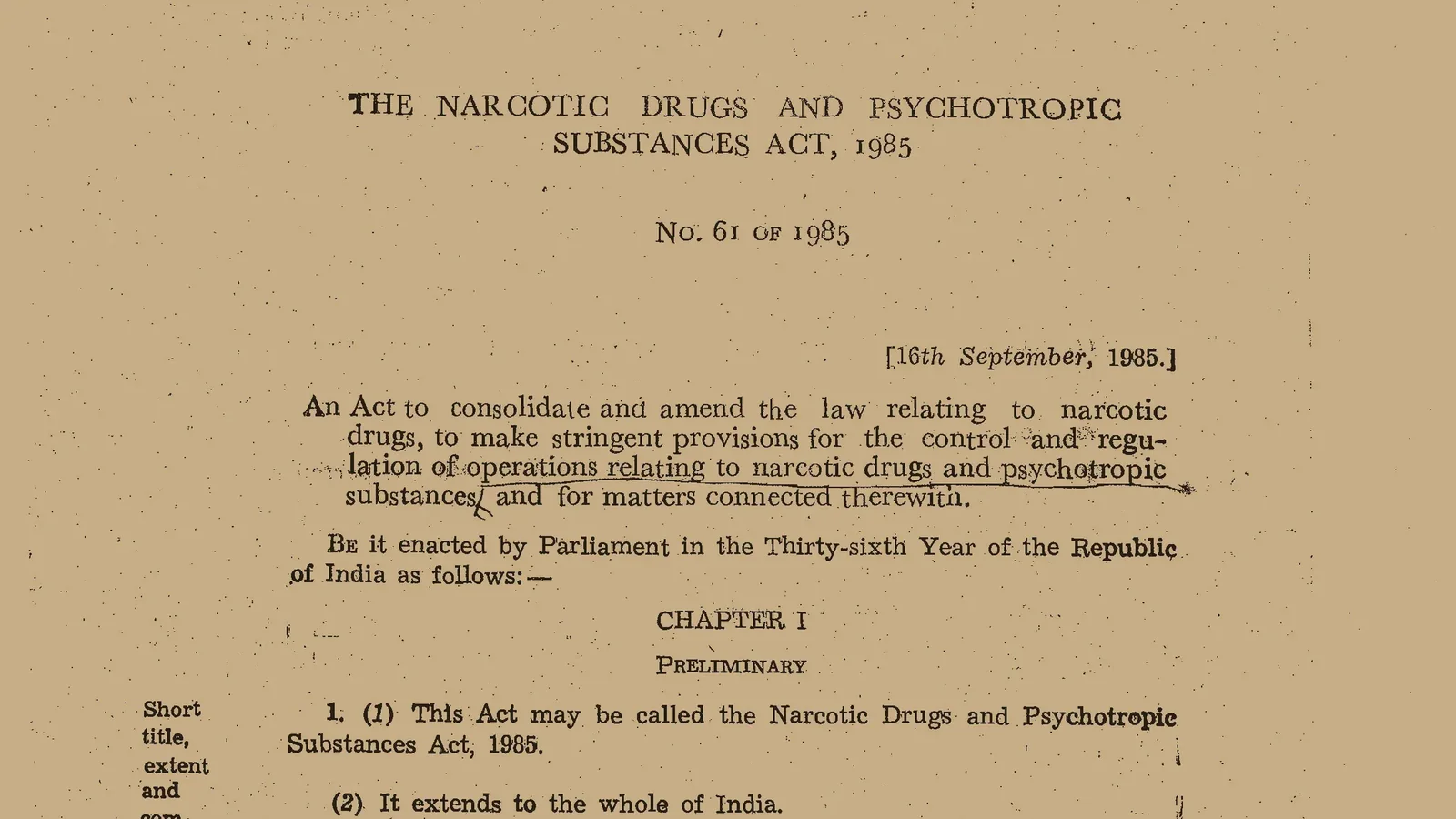
The first page of the Narcotic Drugs and Psychotropic Substances Act, 1985 as passed, headed “No. 61 of 1985” and dated 16 September 1985, with a handwritten note in the margin. Real photograph

This is the Act itself, page one, photographed from the printed volume. Section 64A is nineteen pages further in. Nothing on this site is quoting a summary of it.

Parliament of India, via the Internet Archive · Public domain · original

At a glance

Section 64A covers

  • Using. That is the offence under section 27.
  • An offence involving a small quantity.

It does not cover

  • More than a small quantity.
  • Selling, or carrying it for somebody else.
  • Who gets told. It is about prosecution, and nothing else.
  • Being stopped, searched, or taken to a station. None of those is prosecution, and this page cannot promise they will not happen.
  • Anything before a charge. The section is written about a person already charged — a shield you raise, not a certificate you collect in advance.

And all of these have to be true

  1. 01

    The treatment is at a hospital or centre the Government runs or recognises. A private arrangement is not the same thing.

  2. 02

    You complete it. The Act says the protection may be withdrawn if the treatment is not completed.

  3. 03

    The section is written about a person who is dependent. Whether that word describes you is not something this page can tell you, and not something you have to work out before you call.

If you are not sure which side of that line you are on, that is completely normal, and it is a question you can ask the helpline without giving your name.

The thing you have probably already worked out

If going back is normal, and not finishing cancels it, then what is this worth?

Almost nobody asks it out loud. The home page says people go back, because they do. This page says the protection can be withdrawn if the treatment is not completed, because the Act says so. Together those sound like the thing most likely to happen to you is the thing that switches the protection off.

Read the words though. The immunity "may be withdrawn if the addict does not undergo the complete treatment for de-addiction". May, not will. And it names walking out of treatment halfway through — not using again some months after finishing it. No page can promise you how a court would read that on the day. But the sentence you were afraid of is narrower than it looks.

Light that keeps coming back, in the same pattern, every morning.

And the part that actually stops people

If I tell them, does the person who gave it to me go to jail?

Plainly: yes. Section 77 is a real offence and it is aimed at whoever gave it to you. If you name that person to somebody official, you have put them in front of it. This page is not going to talk you out of caring about that.

But those are two different things. Asking for help for yourself does not require you to name anybody. The helpline is a counselling line, not an investigation. A doctor needs to know what is in you, not who handed it over. "I do not want to say" is a complete answer, and you can give it and carry on with the rest of the conversation.

It gets genuinely hard in one case: when the person giving it to you is also the person hurting you. That is what 1098 is for.

Two chairs, turned towards each other. The first appointment is a conversation — the question is who else gets to hear it.

If you are under 18

There is a second Act, and for you it comes first.

Section 64A is written about people being prosecuted, and most of them are adults. If you are under 18, a different Act reaches you first: the Juvenile Justice (Care and Protection of Children) Act, 2015. Two of its sections are worth knowing by name.

I

Section 2(14) is a list of children who need protecting. Drugs are on it.

Sub-clause (ix) covers a child "who is found vulnerable and is likely to be inducted into drug abuse or trafficking". No website can promise how a committee would read that in your case. What it shows is where Parliament filed this — among children who need care and protection, not in the chapter about offences.

II

Section 77 is about whoever gave it to you.

Giving a child liquor, a narcotic drug, a tobacco product or a psychotropic substance, other than on the order of a qualified doctor, carries up to seven years and a fine of up to one lakh rupees. Section 78 covers anyone who uses a child to carry or pass those things on. Both point away from you.

III

And neither of them cancels the other.

Section 64A still exists and still has every one of its limits. None of this stacks up into a guarantee. What it does mean is that "I am a child who is using" and "I am a criminal" are not the same sentence in Indian law, and almost nobody your age has been told that.

This is not legal advice and it was not written by a lawyer. It describes what three Acts say, each section named so you, or an adult, can read the words yourself on the sources page. If you are standing in front of a police officer or a court, get the free lawyer above and do what they tell you, not what this page says.

None of this is a promise that nothing will happen.It is the opposite of a promise.It is the actual rule, with its limits printed beside it,so that you are deciding on something trueinstead of on a rumour.

Free · any hour · no name Call 14446